How to Write a Grant Application Funders Fund
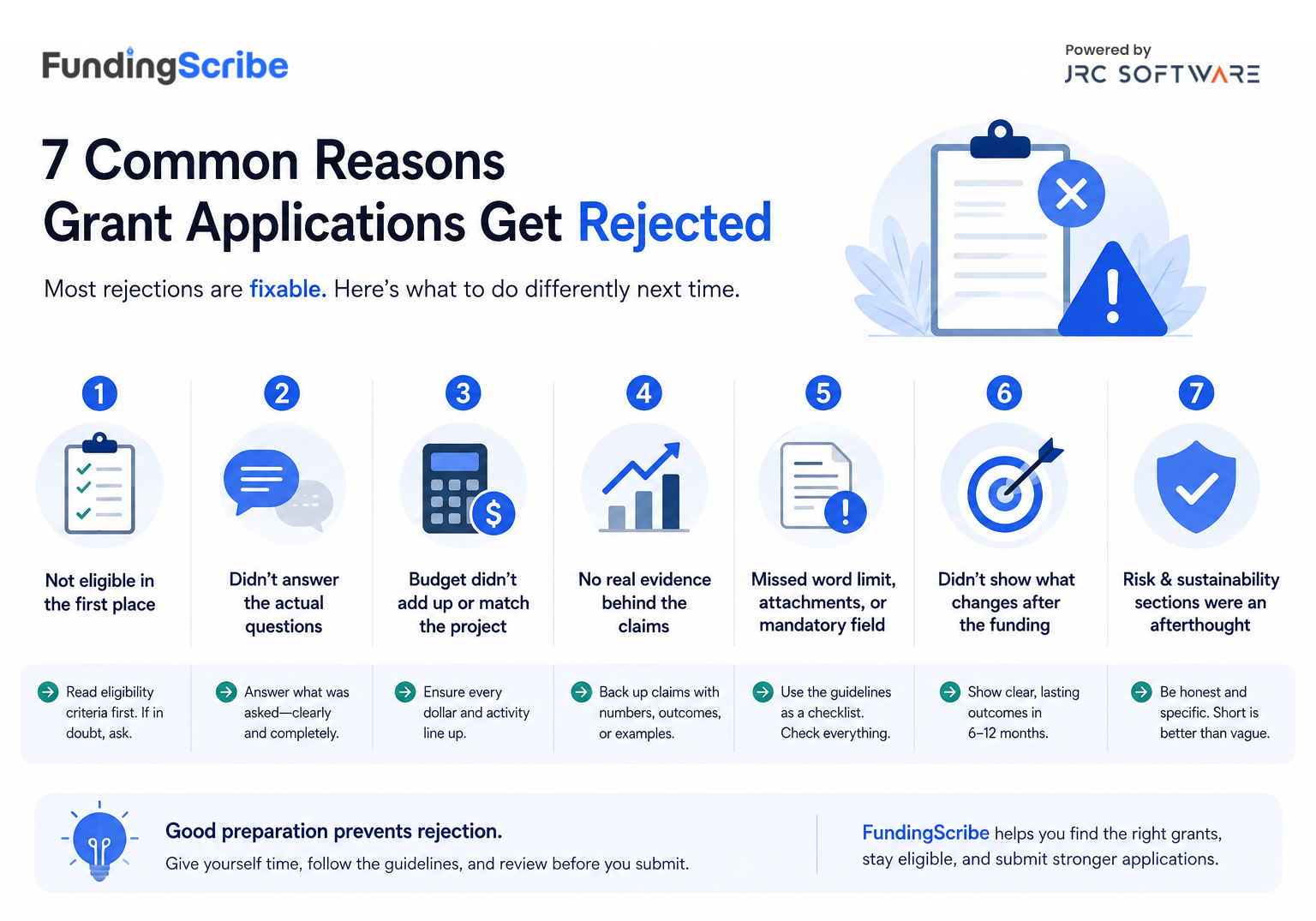
If you've ever spent a weekend rewriting the same paragraph for the fifth time, wondering why your grant application still doesn't sound right you're not alone. Most people writing grant applications in Australia aren't professional grant writers. They're program managers, founders, or the one staff member who got handed the task because "you're good with words."
The good news is that funded grant applications aren't written by people with some secret talent. They're written by people who understand the structure funders are actually looking for, and who give the assessor exactly what they need to say yes.
Here's how to do that.
Start with the guidelines, not the form
It's tempting to open the application portal and start typing. Don't. The guidelines document the one most people skim once and never open again is where the real instructions live.
Funders tell you what they're scoring against, sometimes word for word. If the guidelines mention "demonstrated community need" three times, that phrase (or the idea behind it) needs to show up clearly in your response. Read the guidelines twice before you write a single sentence and keep them open in a second tab the whole time you're writing.
Answer the question that was actually asked
This sounds obvious, but it's the single biggest reason applications miss out. Assessors read hundreds of these. When a question asks "how will you measure success," and the response talks about the history of the organisation instead, that's an easy application to set aside.
Read each question twice before answering. If it asks for three things, give three things clearly labelled or in order, so the assessor doesn't have to go hunting for them.
Lead with evidence, not enthusiasm
Funders don't need to be convinced your cause matters. They need proof you can deliver. Every claim in your application should be backed by something concrete: a number, an outcome, a past result, a quote from a participant.
Compare these two lines:
"Our program has had a huge impact on the local community."
"Last year, 340 families used our food relief program, with 92% reporting reduced financial stress within three months."
The second one wins, every time. It's specific, measurable, and hard to argue with.
Tell them what changes because of this grant
A lot of applications spend all their energy describing the problem and very little describing the actual outcome of the funding. Funders aren't donating they're investing in a result. Be precise about what happens differently if they say yes: how many people are reached, what capability is built, what continues after the money runs out.
If you can answer "what happens in twelve months that wouldn't happen otherwise," your project narrative will be sharper than most of what crosses an assessor's desk.
Budget like someone is going to check it
Grant budgets get more scrutiny than almost any other section, and they're often the first thing flagged in a rejection. Every line item should be easy to justify and should map directly back to something mentioned in your project description. If you're asking for $4,000 for "staff costs," break it down: who, how many hours, at what rate.
Round numbers and vague categories read as guesses. Specific numbers read as a plan.
Don't skip the boring sections
Risk management, sustainability, evaluation frameworks these sections get rushed because they're the least exciting to write. They're also where a lot of applications quietly lose points. A short, honest risk section ("the main risk is volunteer turnover during school holidays, managed by cross-training two backup coordinators") shows more capability than no risk section at all.
Edit for the assessor, not for yourself
Once a draft is done, read it as if you've never seen the organisation before. Cut anything that doesn't directly answer the question. Cut jargon specific to your sector that an outside assessor might not know. Short, plain sentences beat long, impressive ones almost every time assessors are tired, and clarity is a kindness.
Check the basics before you submit
Word limits, missing attachments, unanswered mandatory fields these cause more rejections than weak writing does. Before submission, go through the guidelines one more time as a checklist, line by line. It's a five-minute step that saves a "not eligible" email weeks later.
Writing a strong application takes time most organisations don't have to spare particularly when there's a deadline next week and three other priorities competing for attention. That's the gap FundingScribe was built to close. It draws on your organisation's own documents and past work to draft applications that sound like your team wrote them, runs the eligibility check before you commit hours to a grant that was never a good fit, and reviews each draft against the funder's own criteria before you submit. If you want one less weekend lost to a grant application, FundingScribe is worth a look.

.png)